To seamlessly integrate analytics into processes and decision making.
Why?
Let’s unpack that a bit…
Most organisations run on Excel, with hundreds, thousands, maybe tens of thousands of scattered, unconnected spreadsheets. Often ill-maintained, error-ridden and full of arcane logic. Using and maintaining this chaotic data lake often accounts for around 15-20% of operational and management teams’ time and energy.
Imagine, instead, all the analytics you need embedded in the systems you use, at your fingertips when and where you need it. Stock ordering data right there in the stock management system; operational data embedded in operational software; sales and marketing data tools in the CRM. All the information needed to keep the wheels turning is there, exactly where it’s needed, accurate and up-to-date. The data team who make this happen account for maybe ~5% of your workforce.
In terms of data-informed strategy, most decisions are made on the basis of data that’s been exported to Excel, wrangled by non-data professionals and pasted into PowerPoint. This is often true even when there is a data team producing timely, accurate and useful management information.
Imagine execs getting exactly the information they need to take the pulse of the business, direct to their inbox in mobile/cell phone format. Accurate, up-to-date and unbiased.
Picture managers having access to intuitive dashboards clearly showing how well they’re performing, along with intuitive, interactive tools to help them understand why.
Envisage front line staff having the information they need at their fingertips, seamlessly integrated into the tools they use.
Further down the line, imagine the data team who built – and automated – all this freed up to do deep analytical dives to answer key questions, test hypotheses and forecast outcomes.
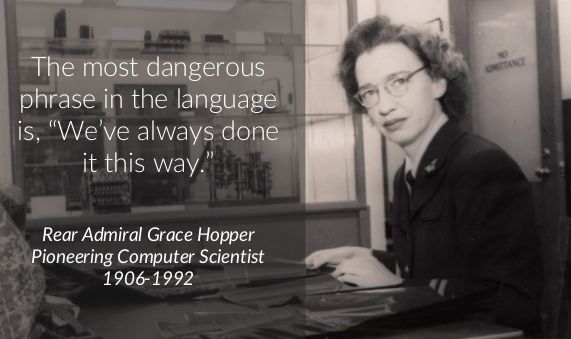
None of this is pie in the sky. It’s a living reality in some organisations. It just takes a bit of vision and a willingness to change the way things are done.
The last bit is the real hurdle.